PHARMACOKINETICS // WASHOUT
How Long Ipamorelin Stays in Your System: Half-Life
About two hours, terminal, in humans. One GH pulse near 40 minutes. The numbers, and what they mean for detection.
The short answer
How long does ipamorelin stay in your system? In the only human pharmacokinetic study, the terminal half-life was about 2 hours after IV dosing [2]. Half-life is the time it takes the body to clear half of what's in the blood. After roughly five half-lives a compound is essentially gone, so the parent peptide is largely cleared within about 10 hours. The effect is even shorter than the molecule: ipamorelin produces a single pulse of growth hormone that peaks near 40 minutes after dosing and then subsides [2]. That is the headline. Two caveats follow. First, this half-life is from IV dosing in a small study; the subcutaneous route most people use was not characterized. Second, "cleared from blood" is not the same as "undetectable by an anti-doping lab," which is a separate question covered below.
The pharmacokinetic numbers
The human PK/PD study (healthy male volunteers, n=8 per dose level, five 15-minute IV infusions of 4.21-140.45 nmol/kg) found dose-proportional, linear kinetics [2]. The specifics: terminal half-life approximately 2 hours; clearance 0.078 L/h/kg; steady-state volume of distribution 0.22 L/kg. The small volume of distribution indicates the peptide stays largely in the circulation rather than partitioning deep into tissues. These are, notably, among the only human ipamorelin numbers that exist — the figure quoted across the internet traces back to this one 1999 dataset.
What the half-life means for the effect
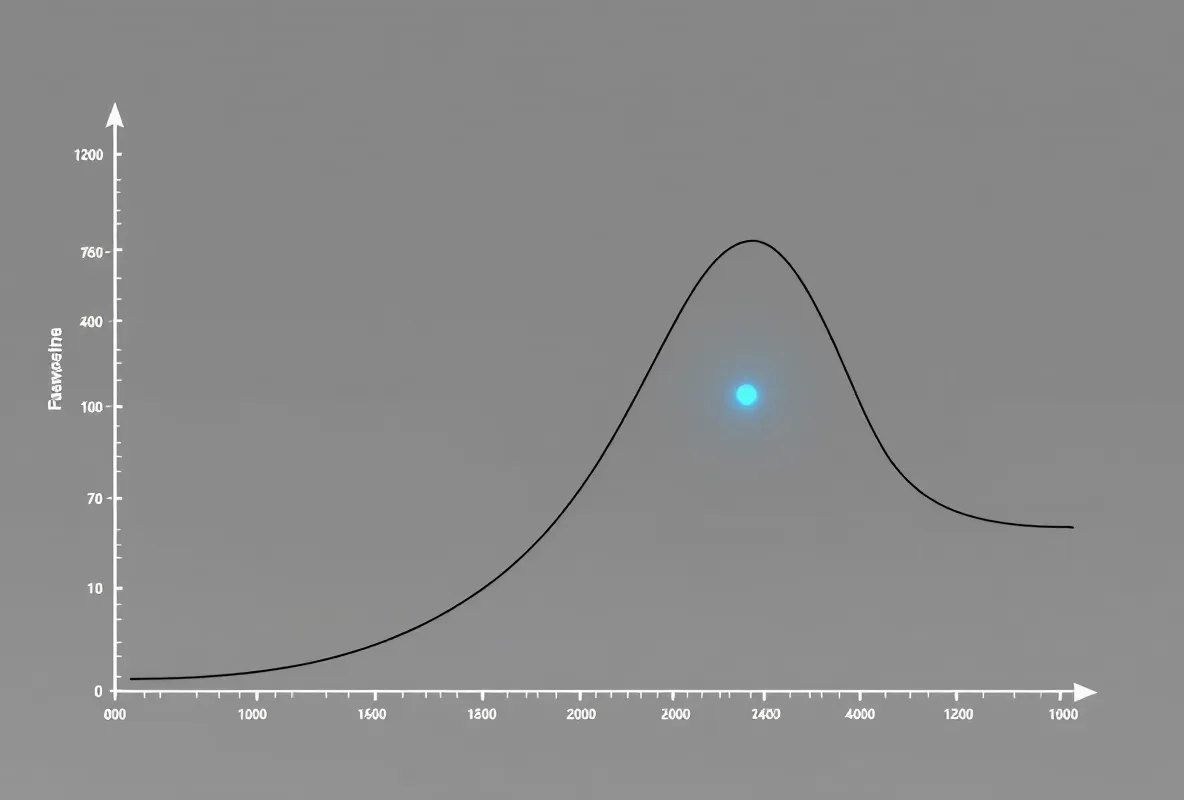
The two-hour half-life explains the compound's behavior. The GH response is not a plateau — it is one discrete pulse, peaking near 0.67 h (40 minutes) after dosing [2]. By the time a few hours have passed, both the peptide and the GH pulse it triggered have largely resolved. This short, pulsatile profile is the reason community routines time injections to particular windows (often pre-sleep, to align with natural nocturnal GH release); those routines are anecdotal and not dosing advice. In rats, ipamorelin's plasma clearance runs roughly 5-fold lower than GHRP-6 — a comparative note, not a human figure.
Detection is a separate question
How long ipamorelin stays detectable is not the same as how long it stays active. Ipamorelin is prohibited in sport at all times under the WADA Prohibited List, category S2 (peptide hormones, growth factors, and mimetics), as a growth-hormone secretagogue, and it is detectable in urine by accredited anti-doping laboratories. Anti-doping detection windows for peptides and their metabolites can extend beyond the parent compound's plasma half-life, because labs target breakdown products and downstream markers, not just the intact peptide. The two-hour figure is the pharmacokinetic half-life [2] — useful for understanding the GH pulse, not a guide to when a test would read clean. This site does not advise on either dosing or testing; it reports what the literature and the anti-doping framework state.